Is Morocco Safe for a Road Trip? Our Tips for Driving with Peace of Mind
Morocco is one of the most visited countries in Africa, and thousands of travelers explore it every year in a rental car without incident. The real risks are not what you might imagine: they mainly relate to the road itself, nighttime, and a few safety habits. Here is what you need to know to drive with peace of mind, from preparation to parking.
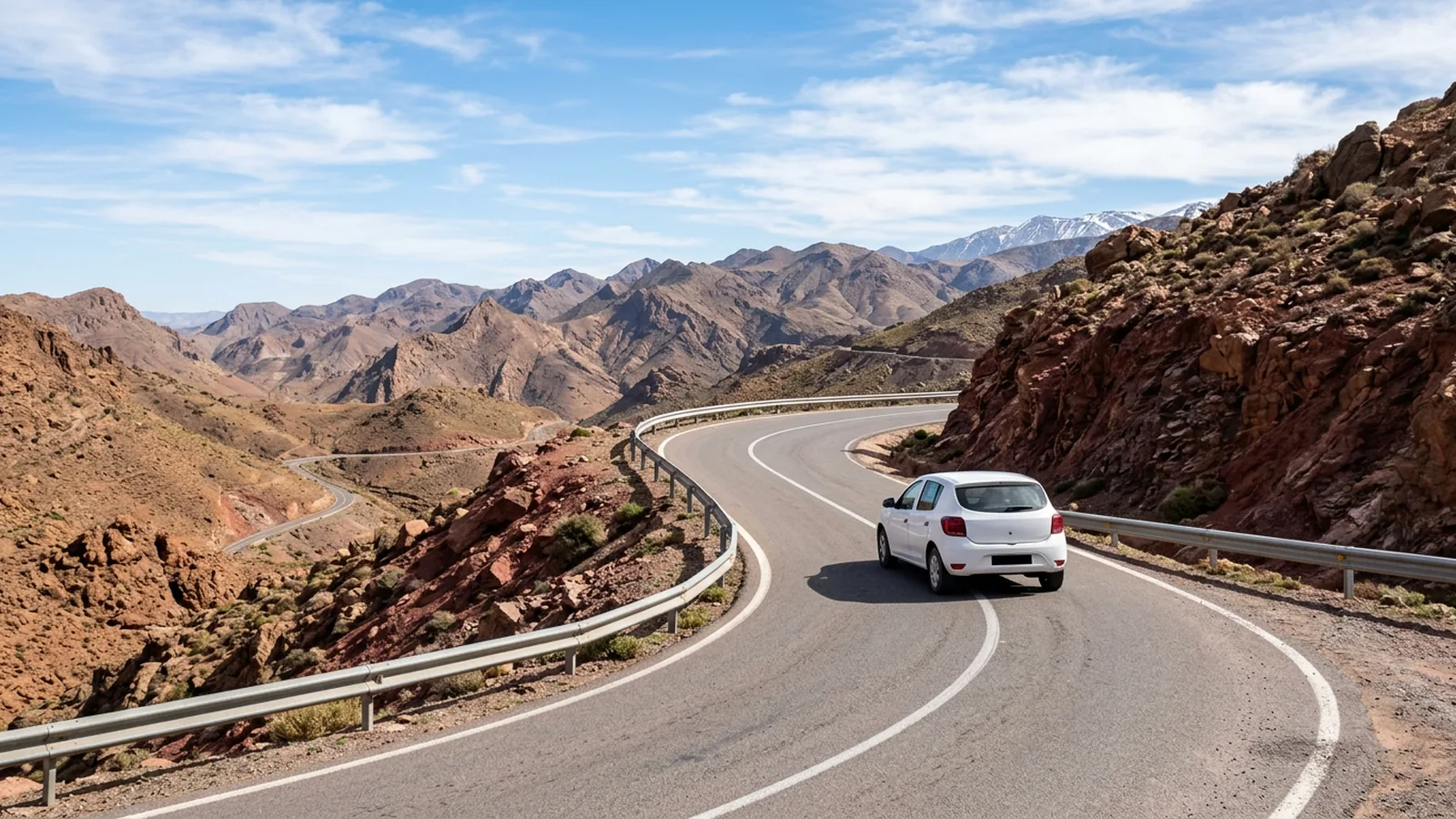
AI-generated illustration (Google Gemini)
Published on 28 October 2026
Contents
- Is Morocco a safe country to travel by car?
- The real risks on the road and how to avoid them
- Should you avoid driving at night?
- Police and gendarmerie checkpoints: how to behave
- Parking and valuables: the right habits
- Emergency numbers and documents to keep with you
Is Morocco a safe country to travel by car?
Yes, for a traveler who takes the usual precautions. Major roads are well maintained, highways connect the main cities, and there is a strong police presence on tourist routes. Before leaving, check your country's travel advisories, which are updated according to current events.
The main danger remains the road: speeding, risky overtaking, pedestrians, and animals on the roadway. It is therefore your driving style, much more than the destination, that ensures the safety of your trip.
The real risks on the road and how to avoid them
Off the highways, national roads are shared by trucks, scooters, carts, pedestrians, and sometimes herds. Drive at the pace of the road, keep your distance, and only overtake when visibility is perfect, especially on the winding roads of the Atlas and the Rif.
Strictly respect the speed limits: fixed speed cameras and mobile checkpoints are numerous, especially at the entrance to towns. Slowing down when approaching a village is not just about avoiding a fine: it is where children cross.
Should you avoid driving at night?
On secondary roads, yes. Lighting is rare, vehicles sometimes drive without lights, and both pedestrians and animals become invisible. Plan your stops to arrive before nightfall, especially in winter when it gets dark early.
On the highway, driving at night poses far fewer problems, but fatigue remains your biggest enemy: take a break every two hours, as service areas are frequent.
Police and gendarmerie checkpoints: how to behave
You will regularly come across checkpoints at the entrance and exit of cities. Slow down, stop if signaled, and calmly present your driver's license, passport, and the car documents provided by the rental agency. In the vast majority of cases, the check lasts a few seconds.
In the event of a recorded offense, the fine is paid on the spot in exchange for an official receipt. Always ask for this receipt: it is your guarantee that everything is in order.
Parking and valuables: the right habits
In the city, preferably park in guarded parking lots or where a parking attendant in an official vest watches over the cars for a few dirhams. Do not leave anything visible in the cabin: bags, phones, cameras, or luggage must stay with you or in the locked trunk.
At night, choose accommodation with a parking lot or garage. This is a criterion to add when booking, especially in large cities and medinas, where you cannot drive a car.
Emergency numbers and documents to keep with you
Note these numbers before leaving: 190 for the police in the city, 177 for the gendarmerie on roads outside towns, 150 for the fire department and emergency services. Also save the assistance number indicated on your rental agreement.
Keep your driver's license, passport, rental agreement, and vehicle documents with you. In the event of an accident, even a minor one, do not move the car before notifying the agency and, if necessary, the police or gendarmerie: the accident report determines the insurance coverage.
Frequently asked questions
Is it dangerous for a tourist to drive in Morocco?
No, provided you adapt your driving: moderate speed off the highway, careful overtaking, and no secondary roads at night. Major roads are in good condition and road checks are frequent.
What are the emergency numbers in Morocco?
190 for the police, 177 for the gendarmerie, 150 for the fire department and emergency services. Also keep the assistance number on your rental agreement.
Can a solo woman do a road trip in Morocco by car?
Yes, many female travelers do it. The same rules apply, with a few extra precautions that we detail in our dedicated guide to solo driving for women.
What should I do in case of a road check in Morocco?
Stop, present your driver's license, passport, and vehicle documents, and remain courteous. Any fine is paid on the spot in exchange for an official receipt, which you should always ask for.
Further reading
driving in Morocco: the complete guide
what to do in case of an accident
traveling solo behind the wheel in Morocco
Sources
France Diplomatie – conseils aux voyageurs, Maroc — diplomatie.gouv.fr
The Smart Choice in Morocco
Ready to Hit the Road in Morocco with Total Freedom?
Written by the Loccor editorial team, the platform connecting travellers with car rental agencies in Morocco.
Browse the cars available to rent in Morocco
More articles from the guide
Car rental prices in Morocco in 2026: real rates by category and city
Car or Train in Morocco: Which Should You Choose for Your Itinerary?
Car Accident in a Rental Car in Morocco: What to Do, Step by Step
Map of Morocco with cities: regions, main cities and distances
SIM card in Morocco and the +212 country code: staying connected on the road